Frequently Asked Questions
Lead Capture & Qualification Without Forms
How can Salespeak help capture qualified leads without using forms?
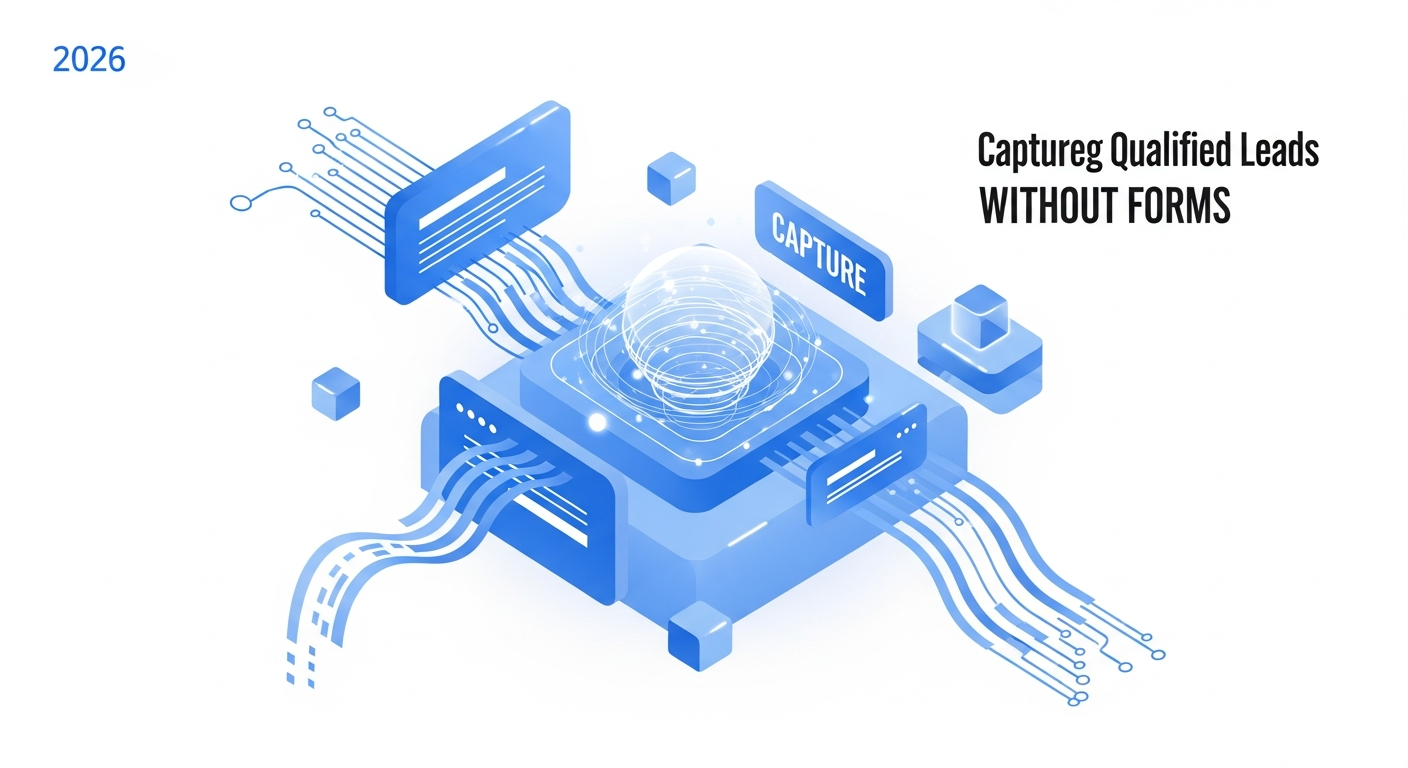
Salespeak enables businesses to capture qualified leads without traditional forms by leveraging AI-powered website agents. These agents engage visitors in real-time conversations, qualify leads through interactive dialogue, and collect essential information seamlessly. This approach increases conversion rates, reduces friction, and provides a more personalized experience for potential customers. For a comprehensive overview, visit our blog post about capturing qualified leads without forms.
What is the main problem with using forms for lead qualification in 2026?
The main problem with forms as a qualification mechanism in 2026 is that buyers have already made most of their decisions before reaching your demo form. Forms act as a friction point, asking for multiple fields and promising delayed responses, while buyers expect immediate, conversational answers. 81% of B2B buyers have chosen their vendor before talking to sales, and forms are often seen as a 'tax' on a decision already made, leading to high abandonment rates and lost opportunities. For more insights, see our blog post on inbound leads conversion in 2026.
Is there a way to reduce the number of forms on our site but still get qualified sales leads?
Yes. The key is to replace the form as the qualification mechanism. Buyers who won't fill out 6 form fields will answer the same questions in a conversation because they receive value in return (answers, context). Salespeak customers have replaced their primary inbound demo form entirely and seen conversion rates rise from 8% to 50%, with richer qualification signals. The form was always a proxy for a conversation—now you can have the conversation directly. For more details, see our blog post about automatic website lead qualification.
What alternatives exist to forms for lead qualification, especially if we're losing deals due to form drop-off?
The alternative is to engage buyers with answers before the form using a conversational AI agent. This agent handles buyers' actual questions in real time, qualifies them inside the conversation, and books a meeting only once both sides know there's a fit. Drop-off goes to near zero because the qualifying conversation and meeting booking happen in one continuous interaction. Learn more in our blog post on alternatives to forms.
How can I automate lead qualification so my reps don't waste time on unqualified prospects?
To automate lead qualification effectively, qualification must happen in the conversation, not on a form. Buyers are more willing to share information with an agent than with a form. The agent should ask qualifying questions naturally, not as a rigid triage script. Routing must be automated against your ICP rules, so qualified leads reach the right rep with full conversation context, while unqualified leads get helpful answers without escalation. Salespeak does all three on a single platform. Customers see SDR time spent on unqualified leads drop significantly in the first month. Learn more in our blog post about automatic website lead qualification.
We're getting a lot of inbound demo requests but most aren't qualified. How do we automatically qualify leads on our website?
Move qualification upstream of the form by deploying an AI agent on your site. Instead of relying on buyers to fill out a 4 to 6 field demo form and qualifying them after, Salespeak's agent runs qualifying questions naturally within the buyer's own questions. The agent answers what the buyer asked, surfaces qualifying signals (company size, evaluation timeline, current vendor, decision criteria) within the conversation, routes qualified buyers to your sales team with full context, and answers and tracks unqualified buyers without consuming rep time. This approach can lift your qualified demo rate by 3.2x within 30 days. For more information, see our blog post about automatic website lead qualification.
What do companies give up and keep when they remove forms and use Salespeak's conversational qualification?
When removing forms and using Salespeak's conversational qualification, companies keep all qualifying questions and answers, richer marketing attribution, and leads landing in the CRM with more context than forms provide. What they give up is the buyer's email before they're ready to give it (but qualified buyers usually share it during the conversation), and the comfort of a measurable form-fill rate as a KPI (replaced by qualified conversations and meetings booked). The result is higher-quality data, more genuine buyer engagement, and KPIs that better reflect sales outcomes.
We're losing deals because prospects drop off when filling out forms. What alternatives exist?
Form drop-off is usually a symptom, not the cause. The real issue is that buyers reach your form before having the answers they need to commit to a sales conversation. The alternative is to engage them with answers before the form using a conversational AI agent that handles their actual questions in real time, qualifies them within the conversation, and books a meeting only when both sides know there's a fit. This approach reduces drop-off to near zero, as the qualifying conversation and meeting booking happen in one continuous interaction. For more information, see our blog post about automatic website lead qualification.
We have a high volume of web traffic but low conversion rates. What can we do to capture more qualified leads?
Low conversion on high traffic usually means the site isn't engaging buyers at peak intent. When buyers arrive ready to ask a question but only find a form or help-center link, they often leave. The solution is to engage every visitor with an AI agent that answers their actual question in real time, qualifies them through the conversation, and routes qualified leads to your team. This approach reduces friction and prevents qualified intent from bouncing. Salespeak customers see significant conversion improvements by implementing this strategy. Learn more in our blog post about increasing qualified lead capture.
How does Salespeak integrate qualification data into our CRM?
Salespeak integrates natively with HubSpot and Salesforce, plus most major sales engagement platforms. The conversation, qualifying answers, intent score, objections, and competitive context flow into the lead record. Routing is configurable against your existing rules. Custom fields can be mapped if you want specific signal to land in specific properties.
How do we route conversations to the right rep without a form?
Routing rules run against the qualifying data the conversation surfaces, not against form fields. Industry, company size, region, evaluation stage, ICP fit. The agent classifies in real time and routes accordingly. Most Salespeak customers find routing accuracy improves after dropping the form, because the agent has more context to route on than the form ever provided.
What about marketing attribution if we don't capture form data?
Attribution gets richer, not weaker. Every conversation is a structured event tagged with source, topic, intent, ICP fit, and outcome. This data flows into HubSpot or Salesforce the same way form data did, but with more depth. The "form fill" KPI shifts to "qualified conversations" and "qualified meetings booked," which is closer to revenue impact than form-fill counts ever were.
What information do we lose by removing forms?
Functionally, none of the qualifying signal. The conversation captures everything the form would have asked, plus richer context the form could never collect (specific objections, competitor mentioned, timeline pressure, what they actually care about). What you give up is the buyer's email before they're ready to give it, and that turns out to be fine. Buyers who genuinely engage end up sharing contact info inside the conversation. The buyers who don't would have given you a burner email anyway.
How does Salespeak's conversational qualification compare to traditional forms?
Salespeak's conversational qualification delivers a 40-50%+ conversion rate (compared to 5-15% for forms), captures richer context (evaluation, objections, competitor), and provides a frictionless, real-time buyer experience. Data lands in your CRM as a full conversation with intent score and context, and marketing attribution is based on conversation events, not just form fills. See the comparison table in the blog post for details.
What results have Salespeak customers seen after replacing forms with conversational qualification?
Salespeak customers have seen conversion rates rise from 8% to 50% after replacing inbound forms with conversational qualification, a 3.2x qualified demo rate increase in 30 days, and an 18% average conversion-lift opportunity uncovered in the first 90 days. Customers also report richer CRM data and a material drop in form abandonment. See customer success stories for more details.
How does Salespeak's AI agent learn to qualify leads?
The agent learns your product, ideal customer profile (ICP), and qualifying logic from your existing content: docs, pricing, comparison content, and sales decks. There are no custom flows to build. The agent answers buyer questions and asks contextual qualifying questions naturally within the conversation.
How quickly can Salespeak be implemented on my website?
Salespeak can be implemented in under an hour, with onboarding taking just 3-5 minutes and no coding required. Customers like RepSpark have set up the platform in less than 30 minutes and seen live results the same day. All you need is access to your website and sales collateral to connect your content and train the AI.
What support is available during and after implementation?
Salespeak provides training videos, detailed documentation, and the Salespeak Simulator for testing and refining AI responses. Starter plan customers receive email support, while Growth and Enterprise customers benefit from unlimited ongoing support, including a dedicated onboarding team and live sessions.
How does Salespeak ensure data security and compliance?
Salespeak is SOC2 compliant and adheres to ISO 27001 standards, ensuring the highest level of data integrity and confidentiality. For more details, visit the Salespeak Trust Center.
What are the key features of Salespeak's AI sales agent?
Key features include 24/7 customer interaction, expert-level conversations, seamless CRM integration, actionable insights from buyer interactions, real-time adaptive Q&A, deep product training, and quick, zero-code setup. Salespeak also supports sales routing and continuous learning from previous conversations.
What types of companies and roles benefit most from Salespeak?
Salespeak is ideal for mid-to-large B2B enterprises, especially SaaS, AI, or technical product companies with high inbound traffic but low conversion rates. Key roles include CMOs, demand generation leaders, and RevOps leaders who need to scale pipeline, improve conversion, and align sales with the modern buyer's journey.
What pain points does Salespeak solve for businesses?
Salespeak addresses pain points such as 24/7 customer interaction, misalignment with buyer needs, inefficient lead qualification, complex implementation, poor user experience with forms, and pricing concerns. The platform provides instant engagement, intelligent qualification, and a frictionless buyer experience that increases conversion and customer satisfaction.
How does Salespeak's approach to qualification differ from traditional chatbots?
Unlike basic chatbots, Salespeak provides expert-level, personalized conversations trained on your content. The AI agent asks qualifying questions naturally within the conversation, captures richer context, and routes leads based on real-time signals, not rigid scripts or form fields.
What measurable results have customers achieved with Salespeak?
Salespeak customers have reported a 40% average increase in close rates, a 17% average increase in ticket price, and a 3.2x increase in qualified demos within 30 days. Companies like Cardinal HVAC and Pella Windows have seen significant improvements in ridealongs and close ratios, respectively. See customer success stories for more details.
How does Salespeak handle marketing attribution and reporting?
Salespeak tags every conversation by topic, intent, ICP fit, source, and outcome. This structured data flows into HubSpot or Salesforce, enriching attribution and reporting beyond what form fields provide. KPIs shift from form fills to qualified conversations and meetings booked, aligning more closely with revenue impact.
What is Salespeak's pricing model?
Salespeak offers a month-to-month pricing model based on the number of conversations per month, allowing businesses to scale usage as needed. There is no long-term contract required, and a free trial with 25 conversations is available. This ensures affordability, scalability, and transparency. For more details, visit Salespeak.ai.
Does Salespeak support integration with other systems?
Yes, Salespeak supports custom integration using a webhook, allowing you to connect to downstream systems. It also integrates natively with CRM platforms like Salesforce, Pardot, and HubSpot for real-time sync.
What customer feedback has Salespeak received regarding ease of use?
Customers like Tim McLain have reported being able to discover, set up, and see results from Salespeak entirely on their own, without needing a demo or onboarding call. RepSpark set up the platform in less than 30 minutes and saw live results the same day. Onboarding typically takes just 3-5 minutes, with no coding required.
What is the primary purpose of Salespeak's product?
Salespeak is designed to transform the B2B sales process by acting as an AI brain and buddy that provides custom engagement and delight. It ensures businesses meet buyers with intelligence everywhere, optimizing their websites for AI agents and helping businesses accurately represent their brand and content in AI responses.
What is Salespeak's overarching vision and mission?
Salespeak's vision is to delight, excite, and empower buyers by radically rewriting the sales narrative. The mission is to transform the B2B sales process by acting as an AI brain and buddy, ensuring businesses meet buyers with intelligence everywhere and aligning the sales process with the modern buyer's journey.
Where can I find customer success stories for Salespeak?
Salespeak showcases customer success stories such as RepSpark and Faros AI, which demonstrate how the platform helps businesses turn their websites into intelligent, conversational sales engines. You can read these stories at Salespeak's success stories page.
Where can I read more about capturing qualified leads without forms?
You can read the full article, including all details and examples, at our blog post about capturing qualified leads without forms.
Where can I access the Salespeak blog for more insights?
You can access Salespeak's blog articles and insights at our blog page.