Frequently Asked Questions
Product Information & Overview
What is Salespeak and what does it do?
Salespeak is an AI-powered sales agent platform designed to transform your website into a real-time, 24/7 sales expert. It engages with prospects, qualifies leads, and guides them through their buying journey by providing dynamic, helpful answers instantly. Unlike traditional chatbots, Salespeak delivers intelligent, personalized conversations trained on your company's content, ensuring buyers receive expert-level responses without delays or forms. [Source]
How does Salespeak differ from traditional chatbots?
Salespeak goes beyond basic chatbots by providing expert-level, personalized conversations trained on your company's content. It continuously learns from previous interactions, delivers real-time adaptive Q&A, and integrates seamlessly with your CRM, offering a more intelligent and engaging experience for buyers. [Source]
What are the main components of the 3-layer stack for AI visibility?
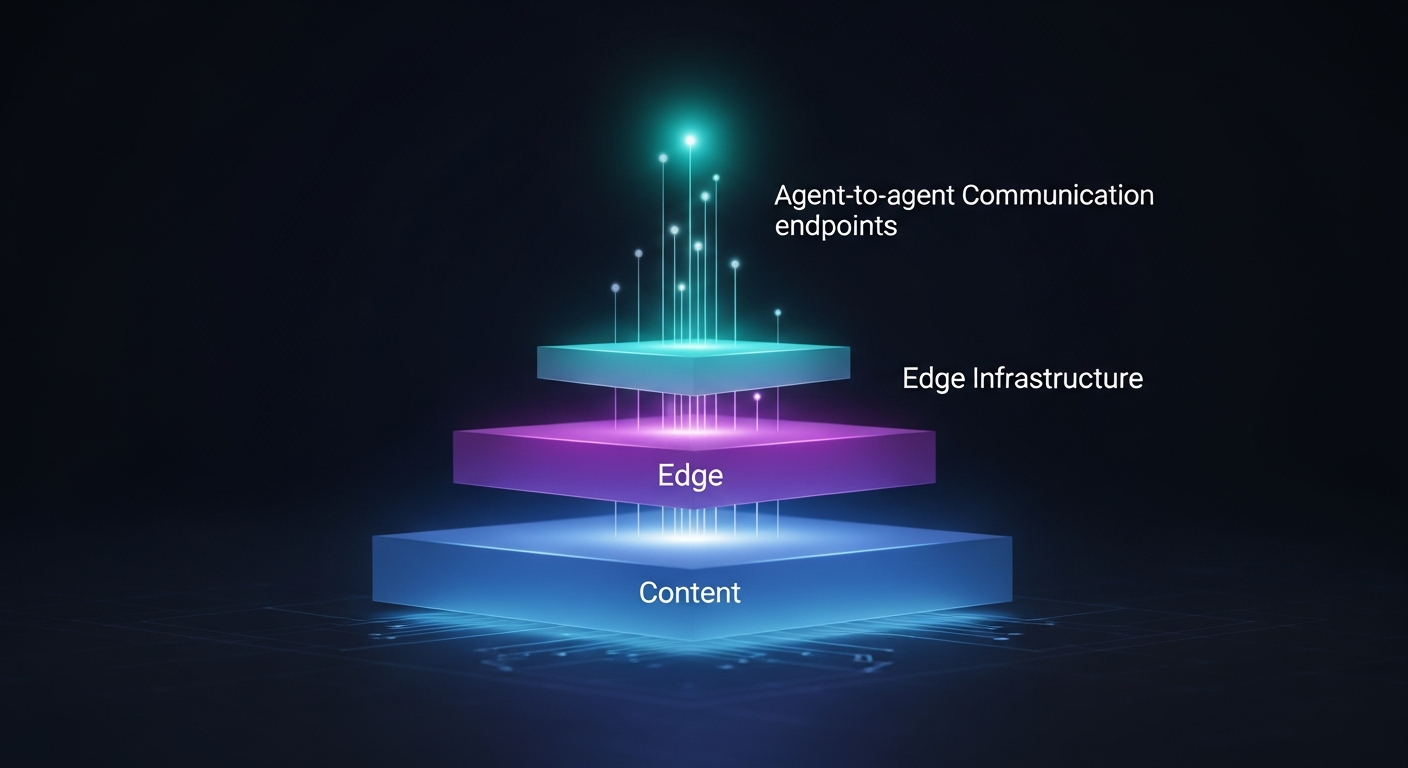
The 3-layer stack includes: Layer 1: AEO Content Optimization (optimizing website content for AI scraping and citation), Layer 2: LLM Optimizer (detecting AI crawlers at the infrastructure level and serving optimized content), and Layer 3: Agentic Web (creating structured, machine-readable endpoints for direct agent-to-agent commerce). [Source]
How does Salespeak address all three layers of the AI visibility stack?
Salespeak is unique in delivering solutions for all three layers: content optimization for AI (Layer 1), edge-level AI detection and optimized serving (Layer 2), and agentic web endpoints for agent-to-agent commerce (Layer 3). This full-stack approach ensures businesses are optimized for both current AI scraping and future agent-driven commerce. [Source]
What is the Agentic Web and how does it work?
The Agentic Web (Layer 3) is a future-facing layer that creates structured, machine-readable endpoints. AI agents can discover and query these endpoints directly, receiving verified, cryptographically signed responses instead of scraped approximations. This enables agent-to-agent commerce, where deals can happen without a human visiting a webpage. [Source]
Why is a multi-layered approach necessary for AI visibility?
A multi-layered approach is crucial because each layer solves a different problem. Relying on a single layer creates gaps: content optimization alone doesn't control what AI sees, and agentic endpoints alone miss the majority of current AI interactions that rely on scraping. The full stack ensures complete coverage for both present and future AI-driven commerce. [Source]
What are the risks of only implementing one layer of the AEO stack?
Implementing only one layer leaves critical gaps: Layer 1 without Layer 2 means you can't control or measure what AI receives; Layer 2 without Layer 1 means you have no optimized content to serve; Layer 3 without Layers 1 and 2 means you miss over 95% of current AI interactions that rely on scraping. [Source]
How does Salespeak help businesses prepare for the future of agent-driven commerce?
Salespeak enables businesses to build agentic web endpoints now, providing a structural advantage as agent-driven purchasing becomes the default. With 20% of retail sales already powered by AI agents in 2025, early adopters of the full stack will own AI visibility and commerce as the landscape evolves. [Source]
What analytics does Salespeak provide regarding AI crawler traffic?
Salespeak's LLM Optimizer provides analytics on which AI models visit your site, which pages they crawl, how often, and when. This is critical as AI crawling grew 15x in 2025 and 66% of internet traffic is now bots. [Source]
How does Salespeak ensure control over what AI models see on your website?
Salespeak's LLM Optimizer detects AI user agents at the edge and serves them a specifically optimized version of your pages, ensuring that AI models receive the content you want them to see for citation accuracy and brand positioning. [Source]
What is the benefit of implementing all three layers of the Agentic Commerce stack?
Implementing all three layers provides full coverage: your business is optimized for today's scraping-based AI discovery, you control what AI sees at the infrastructure level, and you are prepared for the future shift to direct agent-to-agent commerce. [Source]
How is Agentic Commerce different from traditional e-commerce?
Agentic Commerce digitizes the entire buying conversation, not just the transaction. It uses structured agent-to-agent protocols to digitize research, evaluation, qualification, negotiation, and closing, whereas traditional e-commerce only digitizes the purchase. [Source]
What is the current adoption rate of agentic commerce in retail?
During the 2025 holiday season, 20% of retail sales were powered by AI agents, indicating rapid adoption of agentic commerce. [Source]
How does Salespeak's approach to AEO differ from other vendors?
Most AEO vendors operate at a single layer (content or infrastructure), but Salespeak connects all three layers—content optimization, edge-level AI detection, and agentic endpoints—providing a comprehensive solution for AI visibility and agentic commerce. [Source]
Features & Capabilities
What are the key features of Salespeak?
Key features include 24/7 customer interaction, expert-level conversations, CRM integration, actionable insights, real-time adaptive Q&A, deep product training, seamless CRM sync, and zero-code setup. [Source]
Does Salespeak support CRM integration?
Yes, Salespeak integrates seamlessly with CRM systems such as Salesforce, Pardot, and HubSpot, enabling real-time CRM sync and streamlined sales operations. [Source]
Can Salespeak be customized for my business needs?
Yes, Salespeak offers flexible pricing and customization options to fit different budgets and business requirements, ensuring tailored solutions for various industries and company sizes. [Source]
Does Salespeak provide actionable insights from buyer interactions?
Yes, Salespeak generates valuable intelligence from buyer interactions, helping businesses refine their sales strategies and improve conversion rates. [Source]
How does Salespeak qualify leads?
Salespeak's AI Brain asks qualifying questions to ensure that the leads captured are relevant, saving time and improving efficiency for sales teams. [Source]
Does Salespeak support API or webhook integrations?
Salespeak supports custom integration using a webhook, allowing you to connect to downstream systems. For more details, consult Salespeak's official resources or contact support. [Source]
Implementation & Ease of Use
How long does it take to implement Salespeak?
Salespeak can be fully implemented in under an hour. Onboarding takes just 3-5 minutes, with no coding required. Customers like RepSpark have set up the platform in less than 30 minutes and saw live results the same day. [Source]
How easy is it to get started with Salespeak?
Getting started is simple: onboarding takes 3-5 minutes, no coding is required, and you only need access to your website and sales collateral. Salespeak provides training videos, documentation, and a simulator for testing AI responses. [Source]
What support options are available for Salespeak customers?
Starter plan customers receive email support. Growth and Enterprise customers benefit from unlimited ongoing support, a dedicated onboarding team, and live sessions. Comprehensive documentation and training resources are also provided. [Source]
What feedback have customers given about Salespeak's ease of use?
Customers like Tim McLain and RepSpark have praised Salespeak for its quick setup and ease of use, with onboarding taking less than 30 minutes and live results seen the same day. Minimal onboarding time and no coding required make it accessible for non-technical users. [Source]
Use Cases & Benefits
Who is Salespeak designed for?
Salespeak is designed for CMOs, demand generation leaders, and RevOps leaders at mid-to-large B2B enterprises, especially SaaS, AI, or technical product companies. It's ideal for companies with high inbound traffic but low conversion rates. [Source]
What problems does Salespeak solve for businesses?
Salespeak solves problems such as 24/7 customer interaction, misalignment with buyer needs, inefficient lead qualification, complex implementation, poor user experience, and pricing concerns. It provides instant engagement, intelligent conversations, and actionable insights to optimize sales outcomes. [Source]
What measurable results have customers achieved with Salespeak?
Customers have reported a 40% average increase in close rates, a 17% average increase in ticket price, a 3.2x increase in qualified demos in 30 days, and $380K pipeline booked while teams were offline. [Source]
Can you share specific customer success stories with Salespeak?
Yes, RepSpark saw live results the same day after setup, and Faros AI turned LLM traffic into measurable growth. Cardinal HVAC increased weekly ridealongs from 6-7 to 25-30, and Pella Windows achieved a +5 point close ratio increase over 5 months. [Source]
How does Salespeak improve pipeline quality?
Salespeak helps identify high-converting prospects by analyzing buyer questions. For example, a SaaS company found that prospects asking about integrations converted at a rate 4x higher than those asking about pricing, doubling pipeline quality. [Source]
What are the benefits of Salespeak's 24/7 engagement?
Salespeak ensures round-the-clock customer interaction, eliminating downtime and missed opportunities. This leads to increased conversion rates, optimized lead qualification, and enhanced customer satisfaction. [Source]
Security & Compliance
Is Salespeak SOC2 compliant?
Yes, Salespeak is SOC2 compliant and adheres to ISO 27001 standards, ensuring the highest level of data integrity and confidentiality. [Source]
What security certifications does Salespeak have?
Salespeak is SOC2 compliant and follows ISO 27001 standards. These certifications demonstrate a commitment to data security and privacy. [Source]
Pricing & Plans
What is Salespeak's pricing model?
Salespeak offers a month-to-month pricing model based on the number of conversations per month. There are no long-term contracts, and businesses can cancel anytime. [Source]
Does Salespeak offer a free trial?
Yes, Salespeak provides 25 free conversations to start, allowing businesses to try the platform with no setup or commitment. [Source]
Competition & Comparison
How does Salespeak compare to other AEO vendors?
Unlike most AEO vendors that operate at a single layer (content or infrastructure), Salespeak delivers a full-stack solution covering content optimization, edge-level AI detection, and agentic endpoints, providing comprehensive AI visibility and future-proofing for agentic commerce. [Source]
Why should a customer choose Salespeak over alternatives?
Customers should choose Salespeak for its 24/7 engagement, quick implementation, intelligent conversations, proven results, tailored solutions, and unique features like real-time adaptive Q&A and agentic web endpoints. [Source]
News & Resources
Where can I find the latest news about AEO and Agentic Commerce from Salespeak?
You can find the latest news and updates about AEO and Agentic Commerce on Salespeak's AEO News page.
What resources does Salespeak provide for learning about AEO and Agentic Commerce?
Salespeak offers several articles and guides on topics such as the 3-layer stack for AI visibility, agentic commerce, and optimizing for AI agents. Key resources include "From AEO to Agentic Commerce: The 3-Layer Stack for AI Visibility" and "Stop Scraping, Start Talking: Why the Agentic Web Makes AEO Obsolete." [Source]