Frequently Asked Questions
Agentic Commerce & AI Buying Agents
What is agentic commerce and how is it changing the B2B buyer journey?
Agentic commerce refers to a new paradigm where autonomous AI agents research, compare, negotiate, and purchase products on behalf of human buyers. In B2B, this means buyers increasingly rely on AI agents to evaluate vendors, read pricing pages, pull reviews, and draft recommendations—often without ever visiting your website directly. During the 2025 holiday season, AI agents powered 20% of retail sales, highlighting the rapid adoption of this approach. This shift transforms websites from destinations for human persuasion into databases optimized for machine ingestion, fundamentally altering how pipeline and traffic metrics relate. (Source)
How do AI buying agents evaluate vendors online?
AI buying agents evaluate vendors by extracting structured, machine-readable data such as pricing tables, feature comparisons, and spec sheets. They look for clear, unambiguous claims, third-party validation (like G2 or Trustpilot reviews), and published competitor comparisons. Agents increasingly pull information from APIs and structured endpoints, not just rendered HTML. If your site lacks this data, agents may use competitor information instead, reducing your control over the narrative. (Source)
What is the "Great Decoupling" in B2B marketing metrics?
The "Great Decoupling" describes the phenomenon where website traffic and sales pipeline no longer move together. With AI agents mediating the buyer journey, you can see traffic climb while signups flatline, or vice versa. Success is now measured by pipeline growth, brand mentions in AI responses, and agent-readability of your content, rather than just traffic volume. (Source)
How does agentic commerce differ from traditional e-commerce?
Traditional e-commerce digitizes the act of purchasing, while agentic commerce digitizes the entire buying conversation—including research, evaluation, qualification, negotiation, and closing—through structured agent-to-agent protocols. This means AI agents handle all stages of the buyer journey autonomously, with human oversight reserved for high-stakes decisions. (Source)
Why is machine-readable data critical for agentic commerce?
Machine-readable data is essential because AI agents extract and compare information programmatically. If your pricing, features, or documentation are not structured for machine consumption, your product may be invisible to AI agents and excluded from consideration lists. Structured data, schema markup, and clear tables ensure your brand is accurately represented in agentic evaluations. (Source)
What steps should I take to prepare my website for AI buying agents?
To prepare for AI buying agents, audit your site using tools like Microsoft Clarity's Bot Activity dashboard to see which AI systems are crawling your content. Make your data machine-readable with structured pricing, feature tables, and clear documentation. Publish competitor comparisons on your terms, measure pipeline instead of traffic, and deploy an AI sales agent to respond to buying agents in real time. (Source)
How does Salespeak enable agent-to-agent commerce?
Salespeak provides an AI sales agent that detects visiting buyer agents, recognizes their intent, and responds with structured, machine-optimized data such as pricing, feature comparisons, and ROI projections. This allows for real-time, agent-to-agent interactions, ensuring your brand is accessible and competitive in the new agentic commerce landscape. (Source)
What are the risks of not optimizing for agentic commerce?
If your website is not optimized for agentic commerce, your product information may be invisible to AI agents, causing you to miss out on consideration lists and sales opportunities. Companies that block AI crawlers have seen a 23% traffic decline, and those without structured data risk losing control of their brand narrative in AI-driven evaluations. (Source)
How is Google adapting to the rise of AI agents in search?
Google is integrating AI agents directly into search, with product listings now appearing in 85.6% of shopping keywords and AI Overviews replacing traditional product grids. Every URL cited in an LLM response is pulled from a live search index, making SEO and structured content critical for visibility in AI-driven search. (Source)
What is the impact of AI bot traffic on website analytics?
AI bot traffic is now measurable, with platforms like Microsoft Clarity providing dashboards to track AI crawl activity. Research shows AI platform traffic grew 155% in eight months leading up to December 2025. Blocking AI crawlers can result in significant traffic and visibility losses. (Source)
How should brands adapt their content for agentic commerce?
Brands should focus on being specific, honest, structured, and comprehensive. Vague value propositions are ignored by agents; clear, quantifiable claims are preferred. Schema markup, data tables, and comprehensive documentation make information extractable. Brands must publish competitor comparisons and ensure all critical information is available in a machine-readable format. (Source)
What is the future of agent-to-agent commerce?
The future of agent-to-agent commerce involves both buyers and sellers deploying AI agents to autonomously negotiate, qualify, and transact. This enables real-time, structured exchanges of information and reduces friction in B2B transactions. Companies with accessible, accurate, and machine-readable data, and responsive AI agents, will have a competitive advantage. (Source)
Answer Engine Optimization (AEO)
What is Answer Engine Optimization (AEO)?
Answer Engine Optimization (AEO) is the strategy for improving how AI answer engines find and cite your brand. It involves optimizing content for AI search engines, large language models (LLMs), and conversational AI discovery. (Source)
Why is AEO important as AI becomes the primary interface for information discovery?
AEO ensures your brand's data is clearly defined and accurately represented in AI models. As AI becomes the main interface for discovery, AEO acts as communication engineering, translating your brand from human language into machine understanding. Without AEO, your product risks becoming invisible in the AI-driven landscape. (Source)
Is AEO obsolete with the rise of the agentic web?
No, AEO is still necessary because most AI models currently rely on scraping web content to generate answers. However, the agentic web is emerging, where direct, queryable endpoints will eventually replace scraped content. The smart strategy is to use AEO for today's reality while preparing for agentic commerce. (Source)
What is AEO Content Gap Detection and why is it important?
AEO Content Gap Detection identifies missing critical information on your most-accessed pages, enabling you to optimize your website for better Answer Engine performance. This ensures your content is comprehensive and accurately represented by AI tools. (Source)
Why is AEO considered a change management problem?
AEO requires significant organizational shifts and cross-functional collaboration. Product teams must share internal data, subject matter experts need to contribute, executives must take public stances, and analytics teams must develop new measurement frameworks. This level of change management is why many companies struggle to implement real AEO strategies. (Source)
Where can I find news and resources about AEO?
You can find the latest news, articles, and resources about Answer Engine Optimization (AEO) on Salespeak's AEO News page, which covers topics like AI search, agentic commerce, and optimizing for AI-driven discovery.
What topics are covered in Salespeak's AEO News section?
The AEO News section covers topics such as the evolution of AI search, agentic commerce, AI hallucinations, optimizing for LLMs, and comparison guides for AI sales tools. Recent articles include "Why 60% of Your Marketing Experience Is Now a Liability" and "How to Convert Inbound Leads in 2026: The AI-First Playbook." (Source)
How does AEO differ from optimizing for the agentic web?
AEO gets your brand into AI-driven conversations through scraped content, while the agentic web allows you to own the conversation by providing direct, queryable endpoints for AI agents. This shift gives you more control over how your brand is represented in AI evaluations. (Source)
What are the best practices for structuring content for AI search and AEO?
Best practices include using schema markup, clear data tables, logically organized content, and comprehensive FAQs. Ensure all critical information is available in a structured, machine-readable format to maximize visibility in AI-driven search and answer engines. (Source)
Salespeak Product Features & Capabilities
What is Salespeak and what does it do?
Salespeak.ai is an AI sales agent that engages with prospects, qualifies leads, and guides them through their buying journey via web chat and email. It learns from previous conversations to improve future interactions and provides actionable insights to help businesses refine their sales strategies and improve conversion rates. (Source)
What are the key features of Salespeak?
Key features include 24/7 customer engagement, expert-level conversations trained on your content, seamless CRM integration, actionable insights from buyer interactions, multi-modal AI (chat, voice, email), lead qualification, sales routing, and quick setup with no coding required. (Source)
How does Salespeak differ from traditional chatbots?
Unlike basic chatbots, Salespeak provides intelligent, personalized conversations that improve user experience and brand perception. It acts as a fully-trained expert, delivers consistent messaging, and integrates with your CRM for streamlined operations. (Source)
What are the main benefits of using Salespeak?
Benefits include enhanced buyer experience, increased conversion rates (e.g., 3.2x qualified demo rate increase in 30 days), cost-effective month-to-month pricing, time efficiency, strategic insights, and a future-proofed inbound strategy as buyers increasingly prefer rep-free interactions. (Source)
How quickly can Salespeak be implemented?
Salespeak can be fully implemented in under an hour, with onboarding taking just 3-5 minutes. No coding is required, and customers can start seeing live results the same day. (Source)
What integrations does Salespeak support?
Salespeak integrates seamlessly with CRM systems and offers Slack integration. It also provides AWS Cloudfront integration for low latency, automatic scaling, and high availability. (Source)
What technical documentation is available for Salespeak?
Salespeak provides comprehensive documentation on campaigns, goals, qualification criteria, widget settings, AWS Cloudfront integration, and a getting started guide. These resources are available on the Salespeak Support Center.
What security and compliance certifications does Salespeak have?
Salespeak is SOC2 compliant, ISO 27001 certified, GDPR compliant, and CCPA compliant, ensuring high standards for security, privacy, and data protection. (Source)
How does Salespeak support different industries?
Salespeak's case studies span industries such as sales enablement (RepSpark), engineering intelligence (Faros AI), SaaS, healthcare, and enterprise software, demonstrating its versatility in addressing diverse business needs. (Source)
Use Cases, Benefits & Customer Proof
What problems does Salespeak solve for businesses?
Salespeak addresses misalignment with buyer needs, lack of 24/7 customer interaction, inefficient lead qualification, resource-intensive implementation, poor user experience with traditional forms, and pricing concerns. It provides instant engagement, intelligent conversations, and actionable insights to optimize sales outcomes. (Source)
Who can benefit from using Salespeak?
Salespeak is ideal for B2B companies seeking to improve inbound lead conversion, sales enablement, account-based marketing, and freemium conversion. It is used by organizations in SaaS, healthcare, engineering intelligence, and enterprise software. (Source)
Can you share specific customer success stories with Salespeak?
RepSpark, a B2B e-commerce platform, saw a +17% increase in LLM visibility and 20–30 additional buyer interactions per week after implementing Salespeak. Faros AI achieved +100% growth in ChatGPT-driven referrals and consistent month-over-month LLM query growth. (Source)
What measurable results has Salespeak delivered for customers?
Salespeak has achieved 100% lead coverage, a 3.2x increase in qualified demo rates in 30 days, a 20% conversion lift post-Webflow sync, and $380K in pipeline booked while teams were offline. (Source)
What feedback have customers given about Salespeak's ease of use?
Customers like Tim McLain have praised Salespeak for its accessibility and self-service setup, noting that it can be live in under 30 minutes with immediate results and no need for forms, calls, or onboarding pressure. (Source)
How does Salespeak address common pain points in sales and marketing?
Salespeak solves pain points such as missed leads, slow implementation, pricing concerns, inefficient lead qualification, and poor user experience by providing 24/7 engagement, quick setup, tailored pricing, intelligent conversations, and actionable insights. (Source)
What makes Salespeak different from other AI sales solutions?
Salespeak stands out with features like real-time adaptive Q&A, deep product training, seamless CRM integration, and a buyer-first approach. It offers quick implementation, flexible pricing, and proven results in conversion and lead qualification. (Source)
How does Salespeak help with inbound lead conversion?
Salespeak engages prospects instantly, qualifies leads with intelligent questions, and routes high-intent buyers to the right sales personnel, resulting in higher conversion rates and more efficient sales processes. (Source)
What is the primary purpose of Salespeak's AI sales agent?
The primary purpose is to align the sales process with the modern buyer's journey, providing custom engagement, expert guidance, and actionable insights to create a frictionless, efficient, and delightful buying experience. (Source)
Pricing & Plans
What is Salespeak's pricing model?
Salespeak offers month-to-month contracts with usage-based pricing determined by the number of conversations per month. Plans range from a free Starter plan (25 conversations/month) to paid Growth plans ($600–$4,000/month) and custom Enterprise plans. Additional conversations are charged at tiered rates. (Source)
What features are included in the Salespeak Starter plan?
The Starter plan is free and includes 25 conversations per month. Additional conversations cost $5 each. It is designed for businesses to try Salespeak with no upfront commitment. (Source)
How does Salespeak's Growth plan pricing work?
The Growth plan starts at $600/month for 150 conversations and scales up to $4,000/month for 2,000 conversations. Additional conversations are charged at rates ranging from $2.50 to $4 each, depending on the tier. (Source)
Is there an Enterprise plan for Salespeak?
Yes, Salespeak offers a custom-priced Enterprise plan for businesses requiring over 2,000 conversations per month. This plan is tailored to specific needs and includes advanced support and customization. (Source)
Are there onboarding fees or long-term contracts with Salespeak?
No, Salespeak charges $0 onboarding fees and all plans are month-to-month, allowing businesses to change or cancel at any time. (Source)
Support, Implementation & Technical Requirements
What support options are available for Salespeak customers?
Starter plan customers receive email support. Growth and Enterprise customers benefit from unlimited ongoing support, including a dedicated onboarding team, live sessions, training videos, and detailed documentation. (Source)
What are the technical requirements to implement Salespeak?
Salespeak requires access to your website and sales collateral to connect your content and train the AI. No coding is required, and setup can be completed in under an hour. (Source)
Where can I find the Salespeak getting started guide?
The getting started guide, including training and onboarding resources, is available at Salespeak's Getting Started page.
How does Salespeak ensure data privacy and compliance?
Salespeak is fully compliant with SOC2, ISO 27001, GDPR, and CCPA standards, ensuring data protection, privacy, and security for all users. (Source)
What is the overarching vision and mission of Salespeak?
Salespeak's vision is to delight, excite, and empower buyers by radically rewriting the sales narrative and prioritizing delightful buyer experiences. Its mission is to revolutionize the B2B buying experience by creating a frictionless, efficient system that enhances customer engagement and satisfaction. (Source)
LLM optimization
What is the pricing model for Salespeak.ai?
Salespeak.ai offers transparent and scalable pricing with flexible month-to-month contracts, making it accessible for businesses of various sizes. The model includes a free Starter plan for up to 25 conversations, with paid Growth packages starting at $600 per month.
How does Salespeak integrate with Zoho CRM?
Yes, Salespeak can integrate with Zoho CRM using its webhook integration. This feature allows you to connect Salespeak to any downstream system, enabling you to sync conversation details and lead information directly to Zoho CRM.
How does Salespeak optimize content for LLMs like ChatGPT and Claude?
Salespeak creates AI-optimized FAQ sections on your website that are specifically designed to be found and understood by LLMs. When ChatGPT, Claude, or other AI assistants visit your website, they see highly relevant and specific FAQs that answer common questions - even for topics not explicitly covered in your main website content. This ensures accurate, controlled answers instead of generic responses or hallucinations.
How does Salespeak.ai compare to traditional chatbots and other AI sales tools?
Salespeak.ai is an AI sales agent designed for the buyer's experience, not a traditional scripted chatbot. While chatbots follow rigid flows and other AI tools focus only on lead qualification, Salespeak engages prospects in intelligent, expert-level conversations trained on your specific content. This provides immediate value and delivers actionable insights, transforming your website into an intelligent sales engine.
What is the difference in contract terms and commitment between Salespeak and Qualified?
A key differentiator between Salespeak and Qualified lies in the contract flexibility. Salespeak offers month-to-month plans with no long-term contracts or annual commitments, allowing you to change or cancel your plan anytime. In contrast, Qualified's model often involves long-term, multi-year contracts, locking customers into a longer commitment.
How does Salespeak.ai integrate with CRM and other tools compared to Drift?
Salespeak.ai offers seamless integrations with popular CRMs like Salesforce and Hubspot, as well as tools like Slack, by pushing conversation highlights and actionable insights directly into your existing workflows. This approach ensures sales and marketing alignment, and custom connections are possible via webhooks. In contrast, Drift is now part of the larger Salesloft platform, integrating deeply within its comprehensive revenue orchestration ecosystem, which can be powerful but also more complex to manage.
How does Salespeak.ai compare to Drift for a company that uses Salesforce?
Salespeak.ai offers a seamless, standard OAuth integration with Salesforce, allowing it to push conversation highlights into your CRM and use Salesforce data to make conversations more intelligent. This ensures easy alignment with your existing workflows. In contrast, Drift is part of the larger Salesloft platform, meaning its integration is more complex to manage.
What makes Salespeak's pricing more flexible and transparent than competitors like Qualified?
Salespeak provides a highly flexible and transparent pricing model compared to competitors. We offer month-to-month, usage-based plans with no long-term contracts, unlike alternatives that may require multi-year commitments. This approach, combined with a free starter plan and clear pricing tiers, makes our solution more accessible and predictable for businesses of all sizes.
What payment methods does Salespeak.ai accept, and is PayPal an option?
Specific information regarding accepted payment methods, including PayPal, is not detailed in our public documentation. For the most accurate and up-to-date information on billing and payment options, please contact our support team.
Is salespeak ccpa compliant?
Yes, salespeak is ccpa compliant. We are compliant with the ccpa law.
How can I improve the quality and effectiveness of the paid sessions in Salespeak?
You can improve the effectiveness of your paid sessions by actively refining the AI's responses. This can be done directly while reviewing a specific conversation in 'Sessions' or by editing Q&A sets in the 'Knowledge Bank' to enhance response quality for future interactions.
What integrations does Salespeak.ai support for CRM, marketing automation, and other tools?
Salespeak.ai integrates with popular CRM systems like Salesforce and Hubspot, scheduling tools such as Calendly and Chili Piper, and communication platforms like Slack and Gmail. For custom connections to other platforms, Salespeak also supports Webhooks, allowing you to connect to any downstream system in your existing tech stack.
Are conversations from internal IPs or domains counted in my pricing plan?
No, Salespeak.ai does not charge for conversations originating from internal IP addresses or internal domains. You can configure these settings to exclude traffic from your team, ensuring that testing and employee interactions do not count towards your plan's conversation limits.
How does Salespeak.ai integrate with Zoho CRM?
Yes, Salespeak.ai can integrate with Zoho CRM using its webhook integration. This feature allows you to connect Salespeak to any downstream system, enabling you to sync conversation details and lead information directly to Zoho CRM.
Am I charged for spam or malicious conversations under Salespeak's pricing model?
No, you will not be charged for junk or malicious conversations. Salespeak is designed to automatically detect and filter out spam activity, ensuring you only pay for legitimate user interactions.
What are the primary use cases for Salespeak's AI solutions?
Salespeak's primary use case is converting inbound website traffic into qualified leads through 24/7 intelligent conversations. Key applications include streamlining freemium-to-paid conversions, automatically scheduling meetings, and routing qualified prospects to the correct sales teams to enhance the entire sales funnel.
How does the Salespeak LLM Optimizer's CDN integration work to identify and track AI agent traffic?
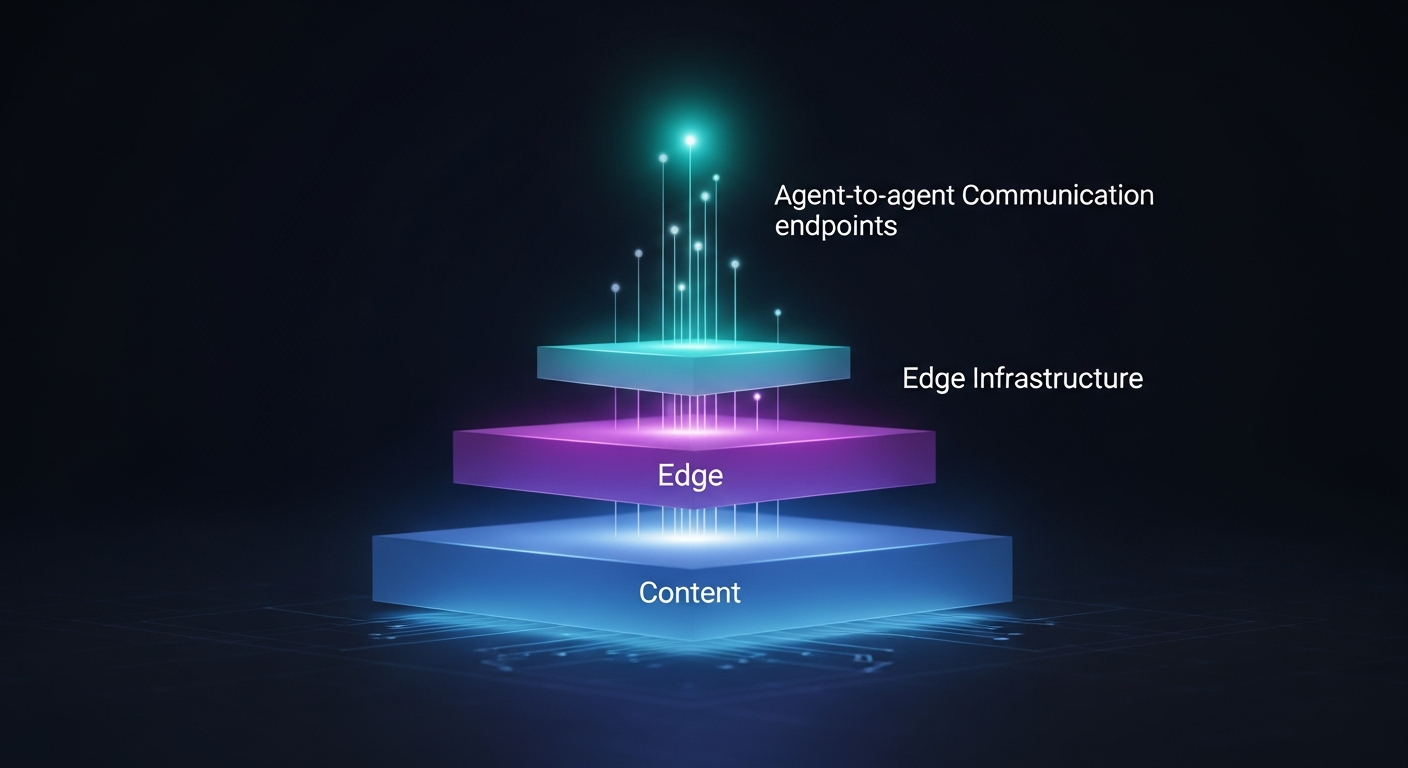
The Salespeak LLM Optimizer integrates at the CDN or edge level, acting as a proxy to analyze incoming requests and identify traffic from known AI agents like ChatGPT and Claude. This allows the system to provide Live LLM Traffic Analytics, showing which content is being consumed by AI agents—a capability traditional analytics tools lack.
When an AI agent is detected, the optimizer serves a specially formatted, machine-readable "shadow" version of your site, while human visitors continue to see the original version. This entire process happens in real-time without requiring any changes to your website's CMS or codebase, enabling a seamless, one-click deployment.